
Fun Grammar Exercises can be the perfect solution if you’re tired of boring grammar drills. Or maybe you’re teaching and your students are zoning out during lessons?
Don’t worry, learning grammar doesn’t have to be dull. Whether you’re an English learner or an educator, these 12 engaging grammar exercises will challenge your skills, reveal your weak spots, and make grammar practice surprisingly enjoyable.
12 Fun Grammar Exercises to Boost Your English Skills
Grammar doesn’t have to be dull or intimidating! Engaging grammar exercises make learning enjoyable, help students grasp tricky rules more easily, and improve long-term retention. When grammar feels like a game, learners are naturally motivated to practice, which leads to noticeable progress in their English skills. Here are 12 fun and effective exercises you can try:
1. Sentence Shuffle Challenge
How it works:
Write a sentence with its words all jumbled up and ask learners to rearrange them into the correct order.
Example:
- Jumbled: yesterday / went / I / store / to / the
- Correct: I went to the store yesterday.
Why it helps:
This exercise strengthens understanding of word order, sentence structure, and the natural flow of English sentences.
2. Spot the Error Game
How it works:
Provide sentences containing a single grammar mistake. Students must identify the error and correct it.
Example:
- Incorrect: She don’t like coffee.
- Correct: She doesn’t like coffee.
Bonus tip:
Add a timer to turn it into a fast-paced, exciting challenge. This also trains quick thinking under pressure.
3. Verb Tense Time Travel
How it works:
Give learners a simple base sentence and ask them to rewrite it in different tenses.
Example:
- Base: She writes emails every morning.
- Past simple: She wrote emails every morning.
- Future continuous: She will be writing emails every morning.
Focus:
This helps students internalise tense rules and use them confidently in writing and speaking.
Read More About: Common Mistakes with Auxiliary and Modal Verbs
4. Grammar Bingo
How it works:
Create bingo cards with grammar terms like past perfect, conjunction, or preposition. Call out clues, and students mark the matching term.
Why it’s great:
It’s interactive, encourages quick thinking, and reinforces grammar terminology in a fun, competitive way.
5. Fill-in-the-Blank Stories
How it works:
Give learners short stories with missing words where key grammar elements should be.
Example:
- She ___ (go) to the market and ___ (buy) some apples.
- Tom ___ (wake) up early every morning. He ___ (brush) his teeth and ___ (eat) breakfast before going to school.
- Yesterday, Sarah ___ (visit) her grandmother. She ___ (bring) flowers and ___ (help) with gardening.
- ___ (a/an) cat was sitting on ___ (the/a) wall. It looked very curious and tried to catch ___ (a/the) butterfly.
- The books are ___ (on/under) the table. The pen is ___ (in/on) the box. Sarah is sitting ___ (behind/next to) her friend.
Goal:
Encourages applying grammar rules in context rather than in isolation, making it easier to remember them.
6. Pronoun Swap Activity
How it works:
Students replace nouns with appropriate pronouns in a paragraph to reduce repetition.
Example:
- Original: Mary saw John and Mary waved to John.
- Revised: She saw him and she waved to him.
Why it’s useful:
It improves fluency, helps avoid awkward repetition, and reinforces correct pronoun usage.
7. Adjective Adventure
How it works:
Start with a simple sentence and ask learners to expand it using adjectives.
Example:
- Basic: The dog barked.
- Expanded: The large, angry dog barked loudly.
Pro tip:
Turn it into a competition: see who can create the most descriptive or imaginative sentence. This boosts vocabulary and creativity.
How it works:
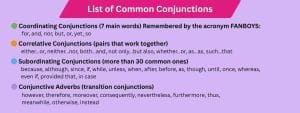
Give two short sentences and ask students to combine them using a suitable conjunction.
Example:
- Sentences: I was tired. I finished my work.
- Answer: I was tired, but I finished my work.
Benefit:
Learners practice connecting ideas, which improves sentence variety and coherence in writing.
9. Passive Voice Detective
How it works:
Provide sentences and ask students to identify whether they are in active or passive voice. Then, have them convert them.
Example:
- Active: The man prepares the meal.
- Passive: The meal is prepared by the man.
Why it helps:
It reinforces understanding of voice, sentence transformation, and subject-object relationships.
10. Question Creation Relay
How it works:
Give learners an answer and ask them to create a grammatically correct question that matches it.
Example:
- Answer: At 5 o’clock.
- Possible question: What time did she arrive?
Benefit:
This exercise develops logical thinking and strengthens question formation skills, which are crucial for communication.
11. Preposition Maze
How it works:
Design a visual map or maze. Students describe positions or movements using correct prepositions.
Example:
- The cat is ___ the table. (under/on/in)
Why students love it:
Visual learners especially benefit, and it makes abstract prepositions easier to understand.
12 “Would You Rather” Grammar Edition
How it works:
Ask learners funny or unusual “Would you rather…” questions and require full-sentence answers using proper grammar.
Example:
- Question: Would you rather eat broccoli every day or never watch TV again?
- Answer: I would rather eat broccoli every day because I love watching TV.
Why it’s effective:
It encourages creativity, conversation, and proper sentence formation in a relaxed, playful environment.
Why These Grammar Exercises Work
These activities are designed to activate real language use, not just memorisation.
They encourage:
- Creative thinking.
- Real-life application.
- Group interaction (ideal for classrooms).
- A positive association with grammar.
By integrating these into your routine, grammar becomes less of a chore and more of an adventure.
Read More:
