
Learning action words is a fun and important step in building strong English skills. Whether you’re a beginner or helping others learn, these 50 action words with easy sentences will boost your vocabulary and make communication easier!
What are Action Words?
Action words are words that show what a person, animal, or thing does in a sentence. In English grammar, action words are called verbs, and they help explain actions, movements, or activities. These words make sentences meaningful by clearly showing what is happening. Action words can describe physical actions, such as running, jumping, or writing, as well as mental actions, like thinking, remembering, or understanding.
Without action words, sentences would feel incomplete and unclear. They are used in everyday communication and appear in almost every English sentence, making them one of the most important parts of speech. Learning action words helps students improve their speaking, reading, and writing skills because they add life and clarity to sentences.
Examples:
- She runs every morning.
- He writes a story in his notebook.
- They play cricket after school.
- I think about my future goals.
- The baby cries
Why Learn Action Words?
Understanding action words helps learners:
- Express themselves clearly
- Build proper sentence structures
- Speak and write with confidence
Let’s explore 50 of the most useful action words with simple sentences for practice.

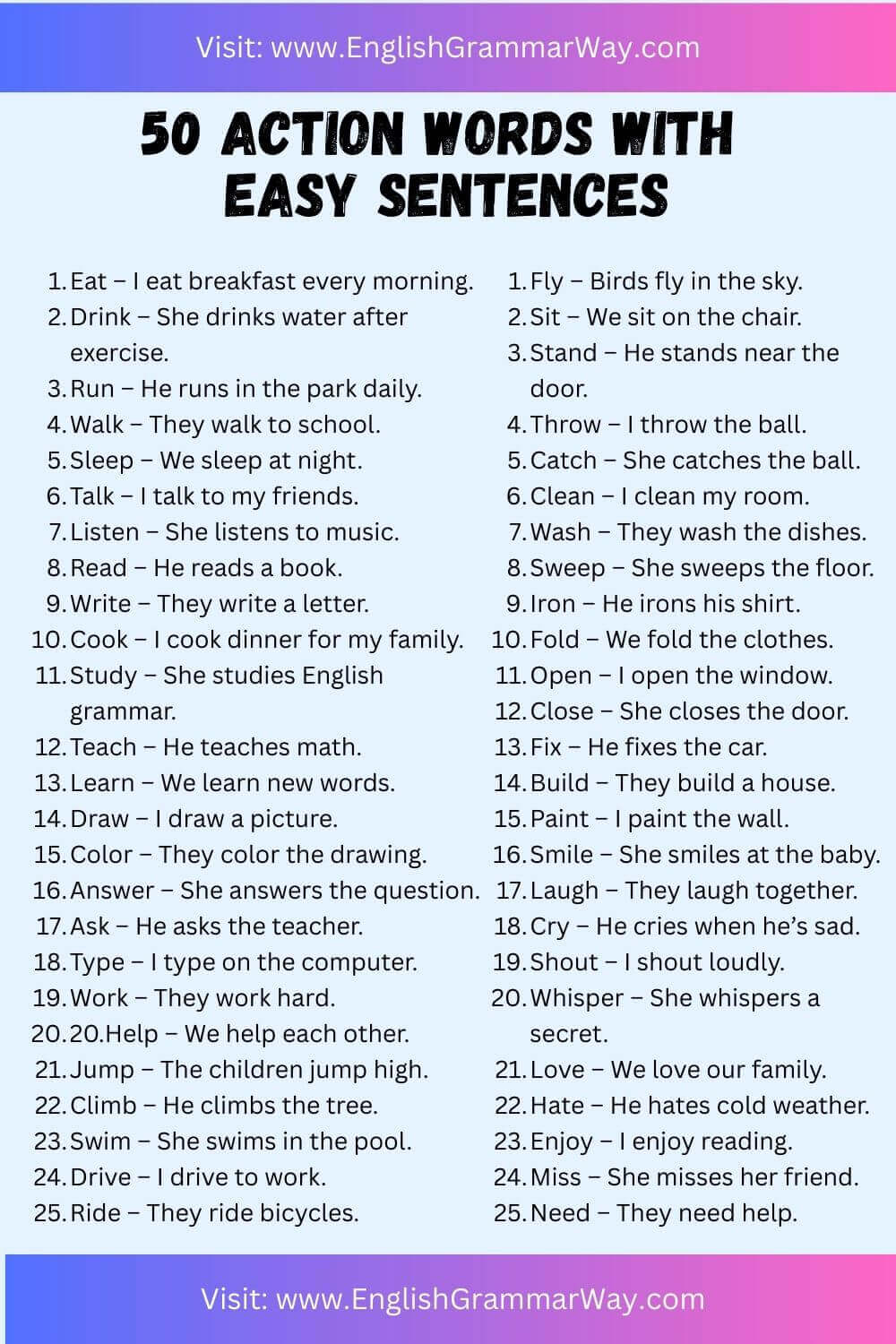
50 Action Words with Easy Sentences
These words are perfect for beginners and can be used in everyday situations. Read each sentence out loud to practice pronunciation and fluency.
1–10: Everyday Activities
- Eat – I eat breakfast every morning.
- Drink – She drinks water after exercise.
- Run – He runs in the park daily.
- Walk – They walk to school.
- Sleep – We sleep at night.
- Talk – I talk to my friends.
- Listen – She listens to music.
- Read – He reads a book.
- Write – They write a letter.
- Cook – I cook dinner for my family.
11–20: School and Work Actions
- Study – She studies English grammar.
- Teach – He teaches math.
- Learn – We learn new words.
- Draw – I draw a picture.
- Color – They color the drawing.
- Answer – She answers the question.
- Ask – He asks the teacher.
- Type – I type on the computer.
- Work – They work hard.
- Help – We help each other.
21–30: Movement and Travel
- Jump – The children jump high.
- Climb – He climbs the tree.
- Swim – She swims in the pool.
- Drive – I drive to work.
- Ride – They ride bicycles.
- Fly – Birds fly in the sky.
- Sit – We sit on the chair.
- Stand – He stands near the door.
- Throw – I throw the ball.
- Catch – She catches the ball.
31–40: Home and Chores
- Clean – I clean my room.
- Wash – They wash the dishes.
- Sweep – She sweeps the floor.
- Iron – He irons his shirt.
- Fold – We fold the clothes.
- Open – I open the window.
- Close – She closes the door.
- Fix – He fixes the car.
- Build – They build a house.
- Paint – I paint the wall.
41–50: Emotions and Expressions
- Smile – She smiles at the baby.
- Laugh – They laugh together.
- Cry – He cries when he’s sad.
- Shout – I shout loudly.
- Whisper – She whispers a secret.
- Love – We love our family.
- Hate – He hates cold weather.
- Enjoy – I enjoy reading.
- Miss – She misses her friend.
- Need – They need help.
Read More: 500 Emotional Vocabulary List
Benefits of Practising Action Words with Sentences
Using action words with sentences helps learners:
- Understand how words fit in real life
- Remember vocabulary more easily
- Speak and write naturally in English
Motivate learners to create their own sentences using these words!.
Final Thoughts
Learning action words is a great way to grow your English skills. These 50 action words are simple, useful, and easy to remember. Try using them in your daily life, whether you are writing a story, chatting with a friend, or practising for school.
Keep practising with more action words with sentences, and you’ll become more confident every day!
