
When we visit a doctor, it is important to speak clearly and understand their advice. A dialogue between doctor and patient is a common conversation in daily life. Learning these dialogues helps you talk about health problems, medicine, and treatment in simple English. In this article, you will find practical examples, common phrases, and easy dialogues that students and learners can practise every day.
By learning these dialogues, students and English learners can:
- Explain symptoms clearly and confidently
- Ask for help and advice in the right way
- Understand the doctor’s instructions accurately
- Speak politely and correctly in medical situations
Common Phrases Used in Dialogues
For Patients:
- Doctor, I am not feeling well.
- I have had a fever since yesterday.
- Can you check my blood pressure?
- Should I take medicine before meals?
- I feel dizzy and tired.
- I have a stomachache and nausea.
- How long will it take to recover?
For Doctors:
- What are your symptoms?
- Take this medicine twice a day.
- You need complete rest.
- Come back after one week.
- Avoid spicy or oily food for a few days.
- Drink plenty of water and eat light meals.
- If symptoms worsen, come immediately.
Common Conversation 1 – Dialogue Between Doctor and Patient (Flu Symptoms)
Patient: Good morning, doctor. I’ve been feeling very unwell for the past three days.
Doctor: Good morning. I’m sorry to hear that. Can you describe your symptoms in detail?
Patient: Sure. I have a high fever, sore throat, runny nose, and sometimes I feel dizzy. I also feel very tired and weak.
Doctor: I see. Did the fever start suddenly or gradually?
Patient: It started gradually two days ago, but today it feels worse.
Doctor: Have you taken any medication so far?
Patient: Yes, I took some over-the-counter medicine for the fever, but it hasn’t helped much.
Doctor: Okay. Any allergies to medicine or previous medical conditions I should know about?
Patient: No allergies, and I am generally healthy.
Doctor: Alright. From your symptoms, it seems like you have a common flu. I recommend rest, drinking plenty of fluids, and I will prescribe antiviral medication. Make sure to take it twice a day for five days.
Patient: Thank you, doctor. Should I avoid anything specific while I recover?
Doctor: Yes, avoid crowded places, stay hydrated, and avoid cold drinks or ice. Also, eat light meals and get plenty of sleep.
Patient: Got it. How long will it take for me to fully recover?
Doctor: Usually within a week. If your symptoms worsen or you have trouble breathing, come immediately.
Doctor Patient Dialogue (Fever)

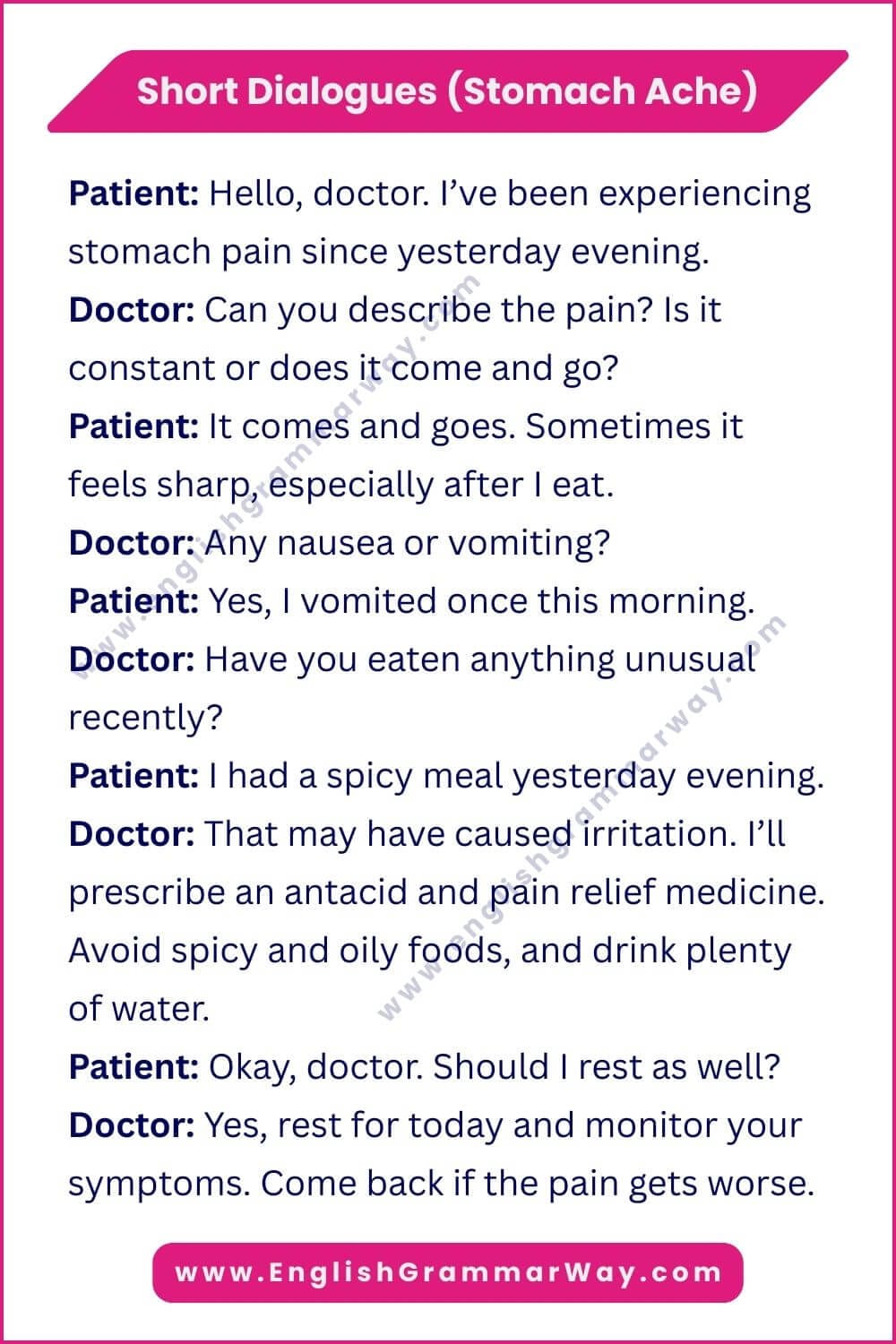
Common Conversation 2 – Dialogue Between Doctor and Patient (Stomach Pain)
Patient: Hello, doctor. I’ve been experiencing stomach pain since yesterday evening.
Doctor: Hello. Can you describe the pain? Is it constant or does it come and go?
Patient: It comes and goes, but sometimes it feels sharp, especially after I eat.
Doctor: Any nausea, vomiting, or diarrhea?
Patient: Yes, I felt nauseous this morning, and I vomited once. No diarrhea yet.
Doctor: Have you eaten anything unusual or very spicy recently?
Patient: I had a spicy meal yesterday evening.
Doctor: That could be a contributing factor. Do you have any history of stomach problems like ulcers or gastritis?
Patient: No, this is the first time I am experiencing such pain.
Doctor: I recommend doing an ultrasound to check your stomach. Meanwhile, avoid spicy, oily, and heavy foods. I will prescribe an antacid and pain relief medication.
Patient: Should I take the medication before or after meals?
Doctor: Take the antacid after meals and the pain relief medicine only when necessary. Drink plenty of water and rest.
Patient: Thank you, doctor. Is there anything else I should be careful about?
Doctor: Avoid skipping meals, eat light foods, and monitor your symptoms. If the pain becomes severe or persists for more than two days, come back immediately.
Doctor Patient Dialogue (Stomach Ache)
Common Conversation 3 – Dialogue Between Doctor and Patient (Routine Check-Up)
Patient: Good afternoon, doctor. I am here for a regular check-up.
Doctor: Good afternoon. How have you been feeling lately?
Patient: I feel generally healthy, but I want to make sure everything is fine.
Doctor: That’s excellent. Let’s start by checking your vital signs. Your blood pressure is normal, and your heart rate is also good.
Patient: That’s good to hear. What about my cholesterol and sugar levels?
Doctor: I will do a blood test today to check. Meanwhile, how is your diet and exercise routine?
Patient: I try to eat healthy and walk for 30 minutes daily, but sometimes I skip exercise due to work.
Doctor: That’s understandable. Regular exercise is very important, even 20–30 minutes a day. Do you drink alcohol or smoke?
Patient: No, I don’t.
Doctor: Great. Once we get your blood test results, we will review them together. Normally, a routine check-up once a year is sufficient unless you experience health problems.
Patient: Thank you, doctor. I’ll try to maintain a consistent routine.
Doctor Patient Dialogue – Follow-up Visit (Diabetes)

Common Conversation 4 – Dialogue Between Doctor and Patient (Chronic Condition – Diabetes)
Patient: Hello, doctor. I am here for my diabetes follow-up.
Doctor: Hello. How have your sugar levels been recently?
Patient: They are slightly high, even though I follow the diet plan and take my medication regularly.
Doctor: I see. How often are you checking your blood sugar?
Patient: I check it twice a day, once in the morning and once before dinner.
Doctor: That’s good. Let me review your recent records. It looks like your morning sugar is fine, but your evening sugar is slightly above normal. We may need to adjust your evening medication.
Patient: Okay, doctor. Is there anything else I should do besides medication?
Doctor: Yes. Exercise daily, avoid sugary snacks, and monitor your diet strictly. Make sure to drink plenty of water.
Patient: I will follow your advice. How often should I come for follow-ups?
Doctor: Every month is ideal for now. Also, watch for symptoms like excessive thirst, frequent urination, or fatigue.
Patient: Understood, doctor. Thank you for your guidance.
Doctor: You’re welcome. Remember, managing diabetes well requires both medication and lifestyle changes. Keep up the good work.
Frequently Asked Questions (FAQ)
Q1: What is the importance of learning doctor-patient dialogue?
A: Learning these dialogues helps you communicate effectively in medical situations, reducing misunderstandings and improving confidence.
Q2: How can I practice doctor-patient conversations at home?
A: You can practice by role-playing with friends, recording yourself, or reading sample dialogues regularly.
Q3: Are these phrases useful for both beginner and advanced learners?
A: Yes, these phrases are simple enough for beginners yet practical for advanced learners seeking natural English communication.
Q4: Can these dialogues help in real-life medical visits?
A: Absolutely. They provide a clear structure for describing symptoms, asking questions, and understanding a doctor’s advice.
Read More: